
Leak Sources and Damage Set the Repair Scope
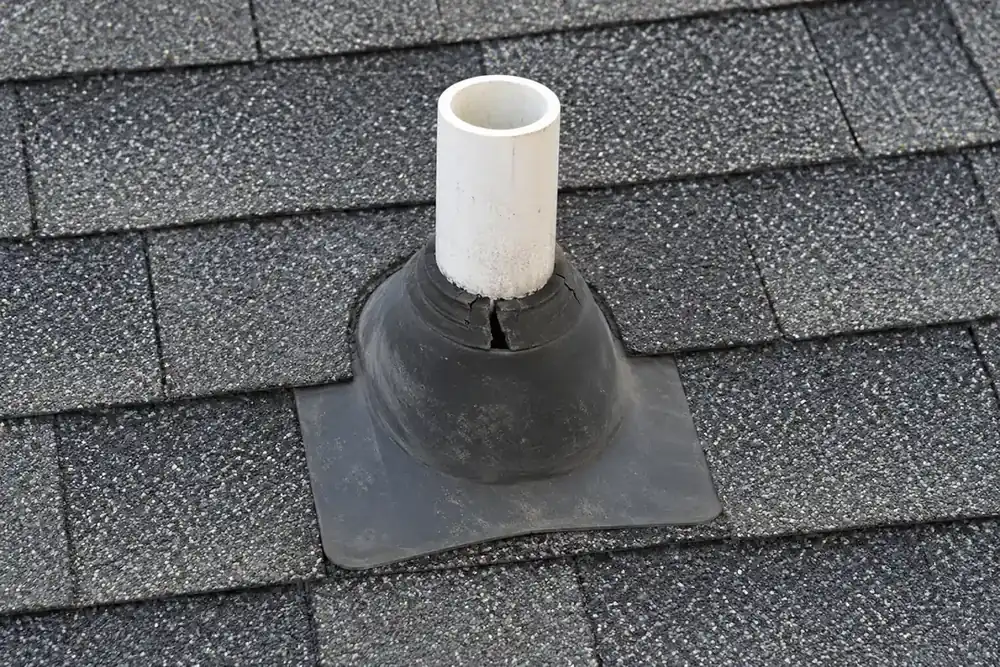
A pipe boot collar has split
Repair cost includes replacing the failed boot and checking the surrounding roof assembly. A split collar leaves an opening around the pipe. Your roofer checks for damage beneath the shingles rather than assuming the collar is the only problem.
The ceiling stain returns after repairs
Repeated repair work adds cost without resolving the leak when the entry point remains unfixed. Water may travel from a different roof joint. The next visit starts by tracing the path and checking the earlier repair.
Wet decking extends beyond the opening
A larger damaged area increases the repair scope beneath the visible defect. New shingles alone do not replace deteriorated wood. Your roofer identifies the affected area and explains the additional work before proceeding.
Roofing repair cost depends on the failed part, access and damage beneath the roof covering. A small ceiling mark can come from a pipe boot, a roof joint or damaged shingles. The visit starts with locating the entry point. Repairing the place where water exits indoors may leave the roof problem untouched.
Leak tracing defines what needs repair
Finding the source establishes the work needed to stop water entering. Moisture can follow wood or other surfaces before reaching the ceiling. Your roofer compares the indoor signs with accessible roof details. Several nearby joints may need inspection before the cause is clear.
Roof leak repair cost includes that diagnostic work as well as the correction. A stain below a chimney does not prove the chimney flashing failed. The scope should name the observed defect and explain how the proposed repair addresses it. See roof leak repair for more on tracing entry points.
The failed part changes materials and labor
A pipe boot repair involves different work from rebuilding flashing or repairing a valley. The boot seals the space around a vent pipe. Flashing directs water where the roof meets another surface. Valleys carry water between intersecting slopes. Each detail has a different position within the roof assembly.
| Finding | Work that affects the scope |
|---|---|
| Split pipe boot | Replacement boot and surrounding shingle work |
| Failed flashing | Access to the joint and replacement metal details |
| Damaged valley | Removal along the channel and rebuilding its layers |
| Broken shingles | Sound adjacent material and a compatible replacement |
| Deteriorated decking | Opening the covering and replacing affected wood |
| Wet insulation | Assessing the affected material beneath the roof |
Older shingles may be difficult to match in color or size. Fragile neighboring shingles can also break during removal. Your roofer explains the area that needs opening and the expected appearance of replacement material. A color match does not establish that the surrounding covering is still sound.
Height and pitch affect access
Roof height, slope and the location of the defect change the labor needed for a repair. A joint above a second story involves different access from a low roof edge. Steep slopes require appropriate working arrangements even when the damaged part is small.
After-hours visits can affect the repair bill. Discuss the visit charge and the proposed work during the call. A call about active leaking does not require a homeowner to climb up and measure the damaged area. The roof assessment belongs to your roofer.
Hidden moisture can widen the repair
Wet decking or insulation can extend the scope beyond the failed roof part. Visible staining does not establish how much material has been affected. Your roofer documents accessible findings and explains what remains covered. Newly exposed damage needs a clear description before additional work proceeds.
Roof repair prices are easier to compare when each scope identifies leak tracing, materials, removal and disposal. The Olive Branch Planning and Development department says its Building Department handles construction permitting and inspections. Your roofer addresses any permit requirements that apply to the proposed work; that planning does not need to delay the call.
Repeated failures can point toward replacement
Repair becomes less useful when the remaining covering cannot support a lasting correction or defects extend across several areas. A single failed boot can be a contained problem. Repeated leaks, brittle shingles and extensive decking damage call for a broader assessment. Age alone does not settle the decision.
Compare the damaged area with the condition of the rest of the roof. The repair or replace discussion explains that distinction. One of our local roofing partners will describe the findings, proposed repair and price so you can decide before work starts.
Indoor precautions keep the call simple
You can call with the drip or stain you already see. Stay off roofs and ladders. Move belongings away from a drip and catch water with a bucket or towels. Keep people out from under a wet or sagging ceiling. Photos from inside or the ground can show the symptom during the conversation.