
Roof Findings That Separate Repairs From Replacement
One pipe boot has split
A repair may address a split boot when the surrounding roof remains sound. Your roofer checks the water path and nearby decking, then defines the repair beyond the visible crack.
Curling extends across multiple roof slopes
Replacement deserves consideration when curling covers several slopes. Widespread wear limits what a small repair can accomplish. Your roofer checks material condition across the roof and documents the extent.
The same ceiling stain keeps returning
Repeated leaking needs a fresh diagnosis before choosing another repair or a new roof. Your roofer traces the entry point and checks for wet decking, failed flashing and moisture beneath earlier patches.
The extent of wear matters alongside age
A limited defect can support a repair when the surrounding roof still has useful life. An aging roof with wear across several slopes needs a broader replacement assessment. Around Olive Branch, the decision starts with the actual roof condition and the cause of the leak.
Found: A ceiling stain has returned beside an older patch.
What it means: The earlier work may have missed an entry point or left deteriorated material nearby.
Next step: Call for an inspection that traces the leak and records the condition beyond the patched area.
Roof age supplies context, but it does not locate a leak. Installation records help identify the covering and previous work. Your roofer compares that history with the present condition rather than assigning a replacement date from age alone.
When to repair a roof depends on the surrounding material
Repair fits a fault that can be corrected without relying on failing adjacent roofing. A split pipe boot, a limited flashing defect or a small damaged area may support that approach. Your roofer checks the nearby shingles and wood before setting the repair boundary.
GAF's roof-leak guidance identifies damaged shingles, flashing problems and roof penetrations as possible leak sources. A stain inside does not establish which source is responsible. The written repair scope should identify the entry point and explain how the repair addresses it.
When to replace a roof follows the spread of failure
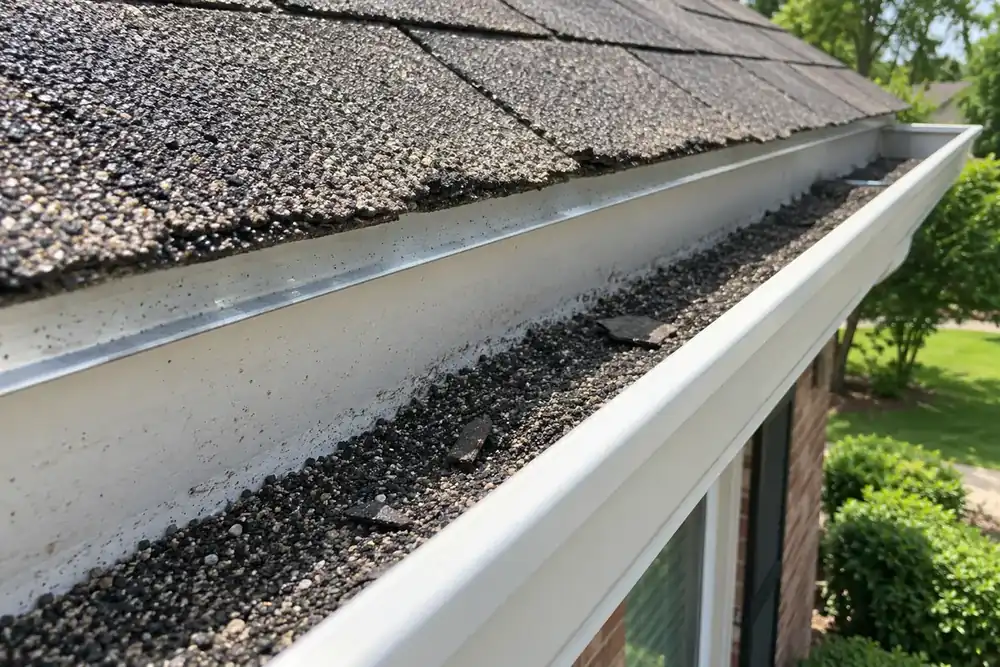
Replacement becomes more relevant when deterioration extends beyond a practical repair area. Curling edges, cracked shingles and bald spots across several slopes suggest a different scope from one isolated defect. Loose granules in a gutter need context: the amount, the covering's age and whether exposed asphalt appears on the roof.
GAF lists widespread leaks, extensive granule loss and curling or cracking shingles among reasons to discuss replacement. An inspection should record which slopes show those conditions. Roof replacement vs repair is a decision about the extent and cause of failure.
| What is found | What it usually means | The usual next step |
|---|---|---|
| One failed boot with sound roofing nearby | A concentrated entry point may be repairable. | Define a repair that includes the connection and affected material. |
| Curling and bald areas on several slopes | Surface wear extends beyond a small patch. | Compare replacement with the limits of further repairs. |
| Soft roof decking | The base beneath the covering needs investigation. | Identify the cause and include wood replacement where needed. |
| Leaks returning in different rooms | More than one entry point may be involved. | Trace each path and assess the roof as a whole. |
| More than one roofing layer | Hidden material complicates the assessment. | Record the layers and explain the removal plan. |
| Damp attic insulation or stained wood | Moisture has reached the space below the covering. | Investigate roof leaks, condensation and ventilation. |
Decking and attic findings complete the picture
The underside of the roof helps separate surface wear from deeper moisture problems. Your roofer looks for stains, damp insulation, daylight through unintended gaps and evidence of poor ventilation. Daylight at a designed vent differs from an opening beside failed flashing.
Soft decking changes the scope because the roof covering needs a sound base. More than one layer can hide deterioration and complicate access to that base. The proposal should explain removal and how newly exposed wood damage will be documented and priced.
How often roof replacement is needed depends on the material, installation and condition. Repeated leaks deserve attention even when the roof is younger than expected. A dry ceiling alone does not show that the covering remains sound.
Roof repair vs replacement cost follows the work
Repair and replacement costs differ because their scopes differ. A repair may involve one connection and a small area of material. Replacement involves a wider covering area, removal, disposal and new roof details. Access, roof pitch, valleys and wood repairs affect both.
One of our local roofing partners discusses the inspection record and explains the proposed charges before work starts. Compare what each option resolves and what worn areas remain. The roof repair cost page and replacement cost page explain the scope factors.
A returning drip is a reason to call
Call about active water or a recurring stain without waiting to gather records. Stay off the roof and off ladders. Move belongings away from a drip and catch the water where safe. Keep people out from under wet or sagging ceilings. Photos from indoors or the ground can show your roofer where the symptoms appear.